


DÉJÀ VU (HE YOU)
Inspiration Blac kBoxTheater,Beijing | Jul 15, 2024
Director - Yihan Chen
Producer - Jiarui Song
Scenic Designer - Caoshi Zhou
Lighting Designer - Yanling Chen
DÉJÀ VU (HE YOU)
Inspiration Blac kBoxTheater,Beijing | Jul 15, 2024
Director - Yihan Chen
Producer - Jiarui Song
Scenic Designer - Caoshi Zhou
Lighting Designer - Yanling Chen


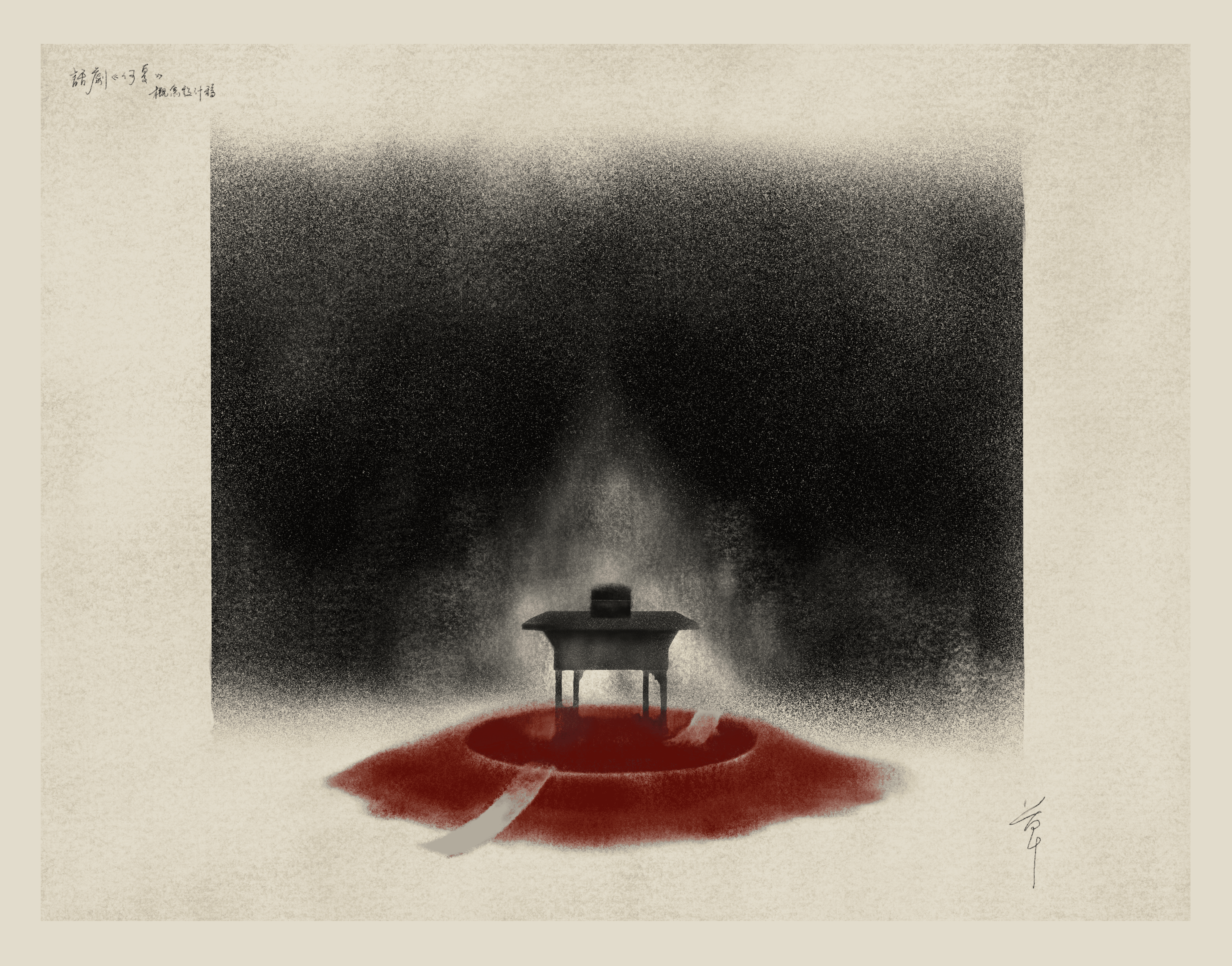
Sketch ↓
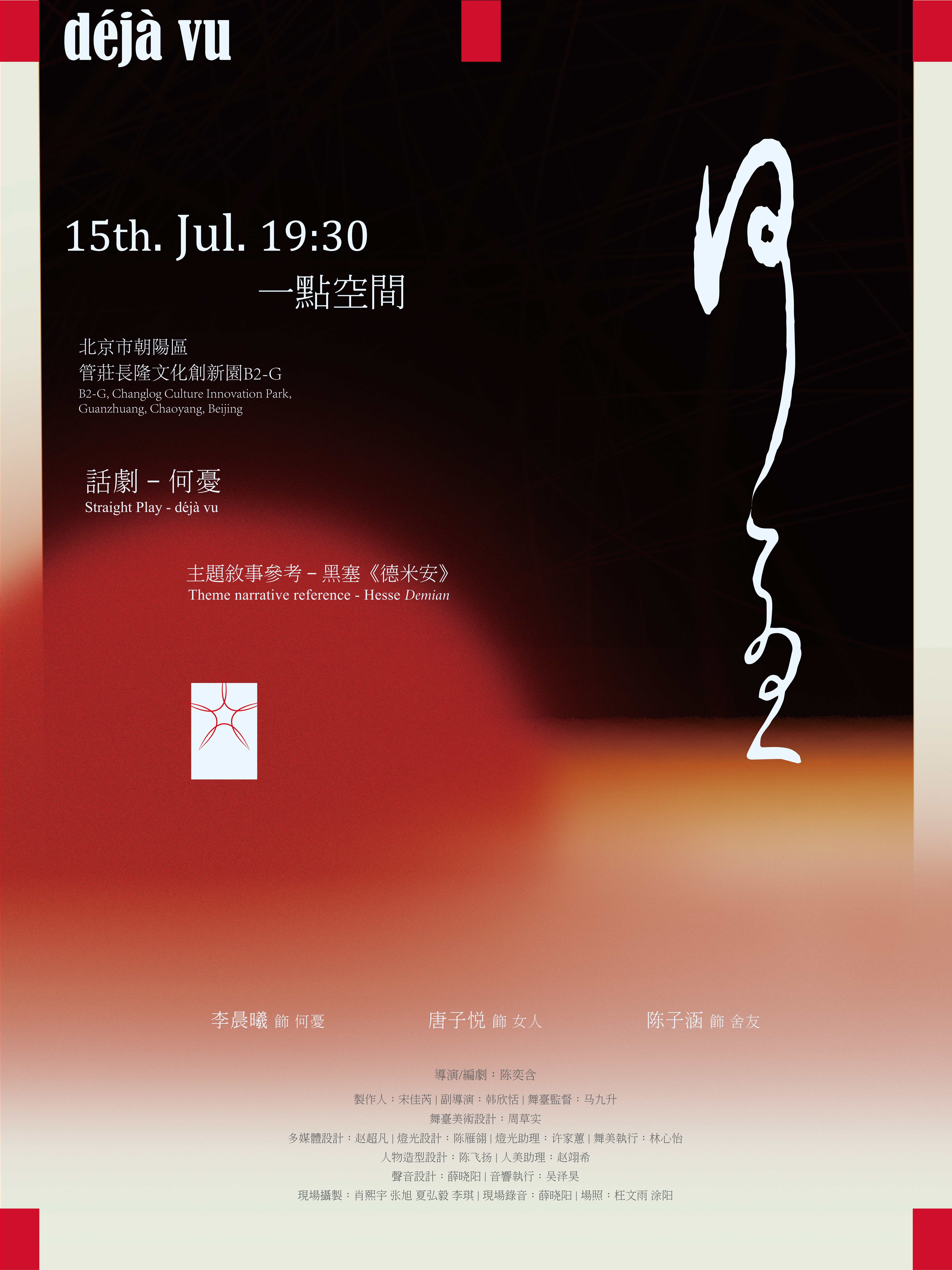
Poster ↓
This play tells the story of He You, a former traditional opera performer who, after the Cultural Revolution, emigrates to the United States and undergoes a process of self-reconstruction through an interplay of memory and reality. The characters include his former roommate from the re-education period and a woman with whom he now shares an apartment in the U.S. The entire piece depicts an irreversible process of “completion” — He You’s act of redefining himself through revisiting the past.
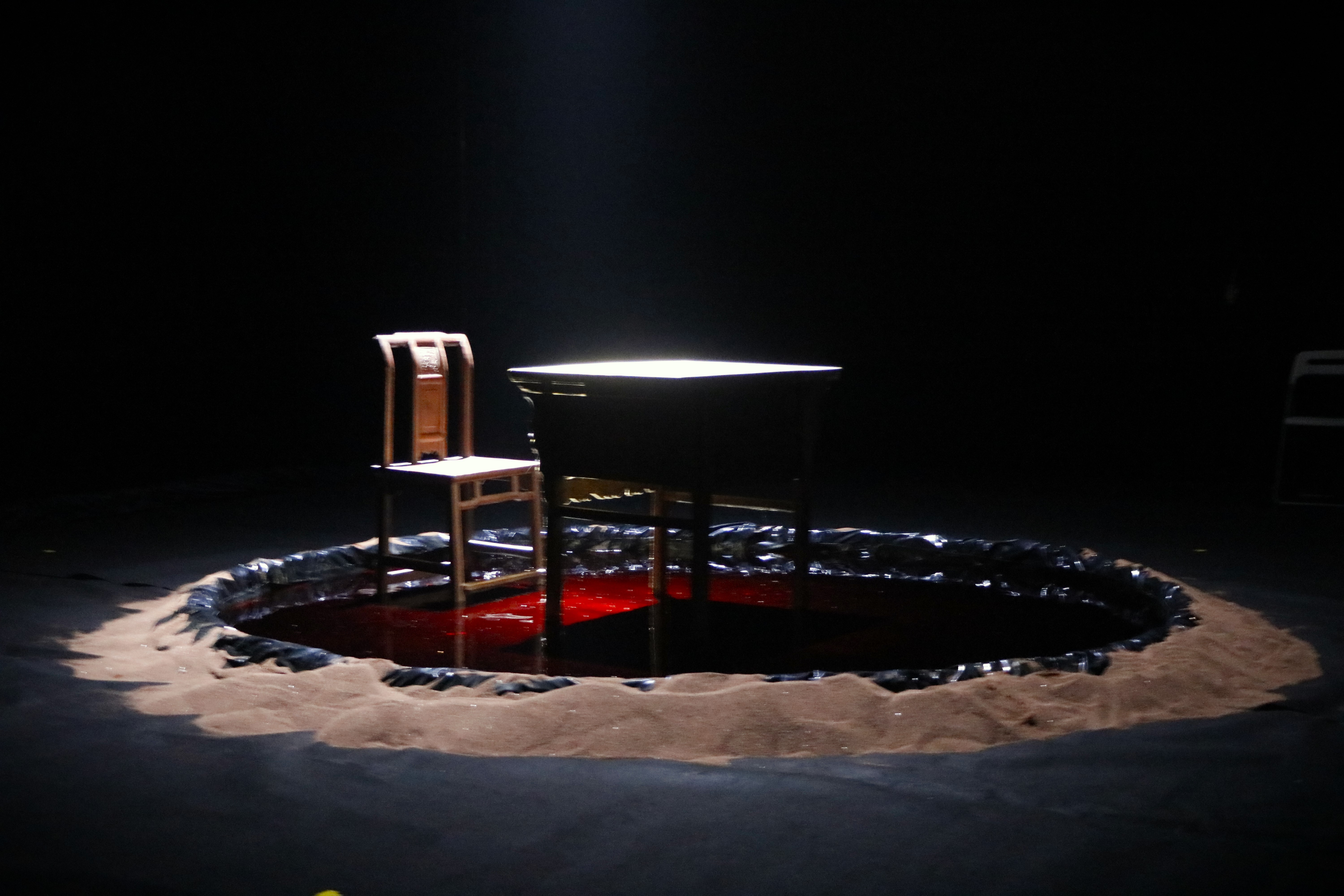
The performance takes place in a small black box theater of about 120 square meters, with the audience seated on three sides. The walls, draped in black velvet, dissolve the spatial boundary between reality and performance. The stage design is intentionally minimal: a pool of blood, a four-meter-long white crinkled fabric, one table, and two chairs. The blood pool serves as both the visual center and a symbolic mirror — reflecting He You and his roommate, the inner and the outer self. The entire performance unfolds like a piece of performance art.
When the audience enters, the roommate is already seated in the blood pool, applying makeup. He is “Demian,” the ideal self — dressed in plain white sleeves, as if ready to take the stage. To evoke the weight of history, all key props are authentic antiques: a discarded elm altar table from a rural village in Hunan, two worn armchairs from Hebei, and a makeup box exported from China in the 1980s.
The staging draws from the codified language of Peking Opera, embracing theatrical abstraction and symbolic economy. The “one table, two chairs” composition and movements such as running in circles are adapted from operatic conventions, transforming life-derived gestures into theatrical expression.
We, too, are born from our culture — stepping outside ourselves, only to look back and see who we are.


This play tells the story of He You, a former traditional opera performer who, after the Cultural Revolution, emigrates to the United States and undergoes a process of self-reconstruction through an interplay of memory and reality. The characters include his former roommate from the re-education period and a woman with whom he now shares an apartment in the U.S. The entire piece depicts an irreversible process of “completion” — He You’s act of redefining himself through revisiting the past.
The performance takes place in a small black box theater of about 120 square meters, with the audience seated on three sides. The walls, draped in black velvet, dissolve the spatial boundary between reality and performance. The stage design is intentionally minimal: a pool of blood, a four-meter-long white crinkled fabric, one table, and two chairs. The blood pool serves as both the visual center and a symbolic mirror — reflecting He You and his roommate, the inner and the outer self. The entire performance unfolds like a piece of performance art.
The performance takes place in a small black box theater of about 120 square meters, with the audience seated on three sides. The walls, draped in black velvet, dissolve the spatial boundary between reality and performance. The stage design is intentionally minimal: a pool of blood, a four-meter-long white crinkled fabric, one table, and two chairs. The blood pool serves as both the visual center and a symbolic mirror — reflecting He You and his roommate, the inner and the outer self. The entire performance unfolds like a piece of performance art.
When the audience enters, the roommate is already seated in the blood pool, applying makeup. He is “Demian,” the ideal self — dressed in plain white sleeves, as if ready to take the stage. To evoke the weight of history, all key props are authentic antiques: a discarded elm altar table from a rural village in Hunan, two worn armchairs from Hebei, and a makeup box exported from China in the 1980s.
The staging draws from the codified language of Peking Opera, embracing theatrical abstraction and symbolic economy. The “one table, two chairs” composition and movements such as running in circles are adapted from operatic conventions, transforming life-derived gestures into theatrical expression.
Sketch ↓
Poster ↓
We, too, are born from our culture — stepping outside ourselves, only to look back and see who we are.